Best Call Tracking for HVAC Companies
Call tracking for HVAC companies that routes emergencies 24/7 and shows which ads book jobs.
The Challenge
HVAC Companies Lose Revenue to Missed Emergency Calls
After-hours emergency calls lost to voicemail
A no-heat call at 11 PM is worth $4,000 or more, but without 24/7 routing it goes to voicemail and your competitor answers instead.
No way to tell which ads drive calls
You spend thousands monthly on Google Ads, Yelp, and direct mail but cannot identify which channels actually generate service calls.
Dispatchers cannot prioritize high-value emergencies
A $6,000 system replacement and a furnace filter question get the same response time because there is no lead scoring.
CallScaler provides call tracking for HVAC companies with a 7-day free trial to start. Features include schedule-based routing for after-hours emergency calls, multi-ring dispatching, AI transcription with urgency scoring, and Google Ads conversion tracking. Tracking numbers cost from $0.50 per month each. Most HVAC businesses spend $75 to $250 per month total for full marketing attribution across Google Ads, truck wraps, yard signs, and direct mail campaigns.
How We Fix It
CallScaler for HVAC Companies
Assign unique tracking numbers to every channel, let AI score your leads, and route calls so none slip through the cracks. See pricing plans, call recording, and AI transcription.
- Route Emergency Calls 24/7 Automatically
Schedule-based routing sends daytime calls to your office, after-hours calls to on-call techs, and weekends to your answering service.
- Score Every Call for Urgency with AI
AI transcribes each call and scores it for emergency signals like no heat, gas smell, or complete system failure.
- Track Every Ad to the Calls It Produces
Assign unique numbers to Google Ads, truck wraps, yard signs, and mailers to see cost per lead by channel.
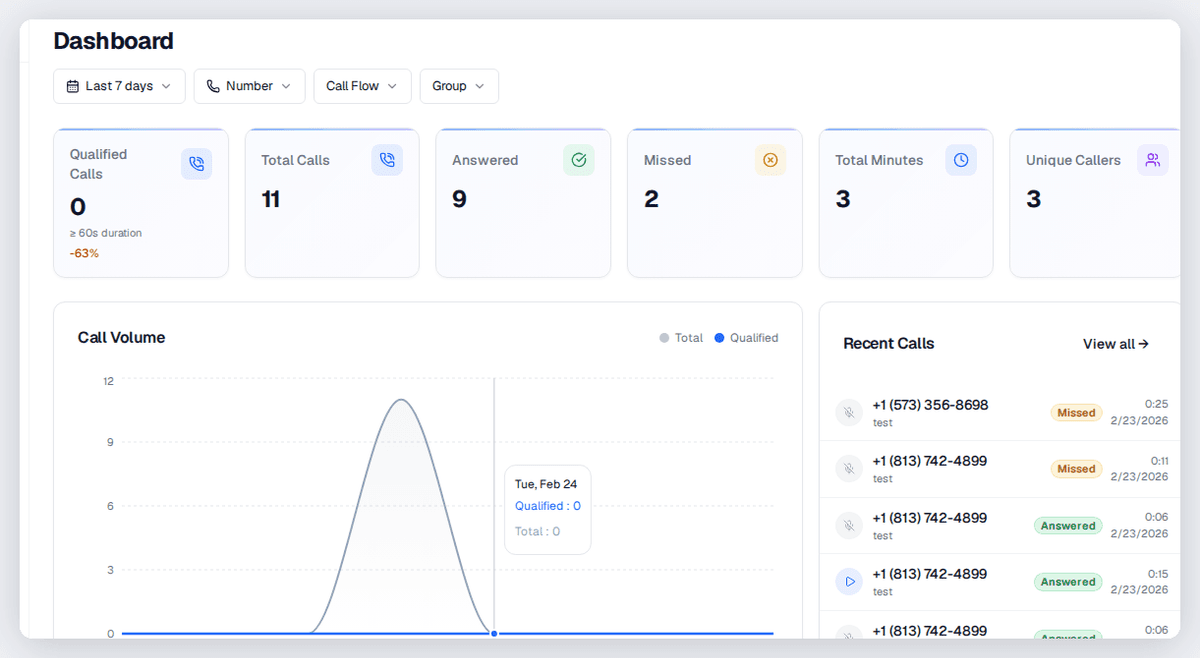
Capture every HVAC lead, day and night
Free to start. 24/7 routing. No contracts or credit cards.
“We were losing 8-12 after-hours emergency calls per month to voicemail. Schedule routing fixed that overnight. Those recovered calls added $31,000 in revenue our first quarter on CallScaler.”
Quick Start
How It Works
Get started in under 5 minutes. No credit card required.
Choose Your Numbers
Get local tracking numbers for Google Ads, truck wraps, yard signs, and direct mail. Starting at $0.50/month each.
Automate Emergency Routing
Schedule-based rules send daytime calls to your office and after-hours calls to on-call techs automatically.
Measure What Books Jobs
AI scores calls by urgency and service type. See which channels drive the most revenue and cut the rest.
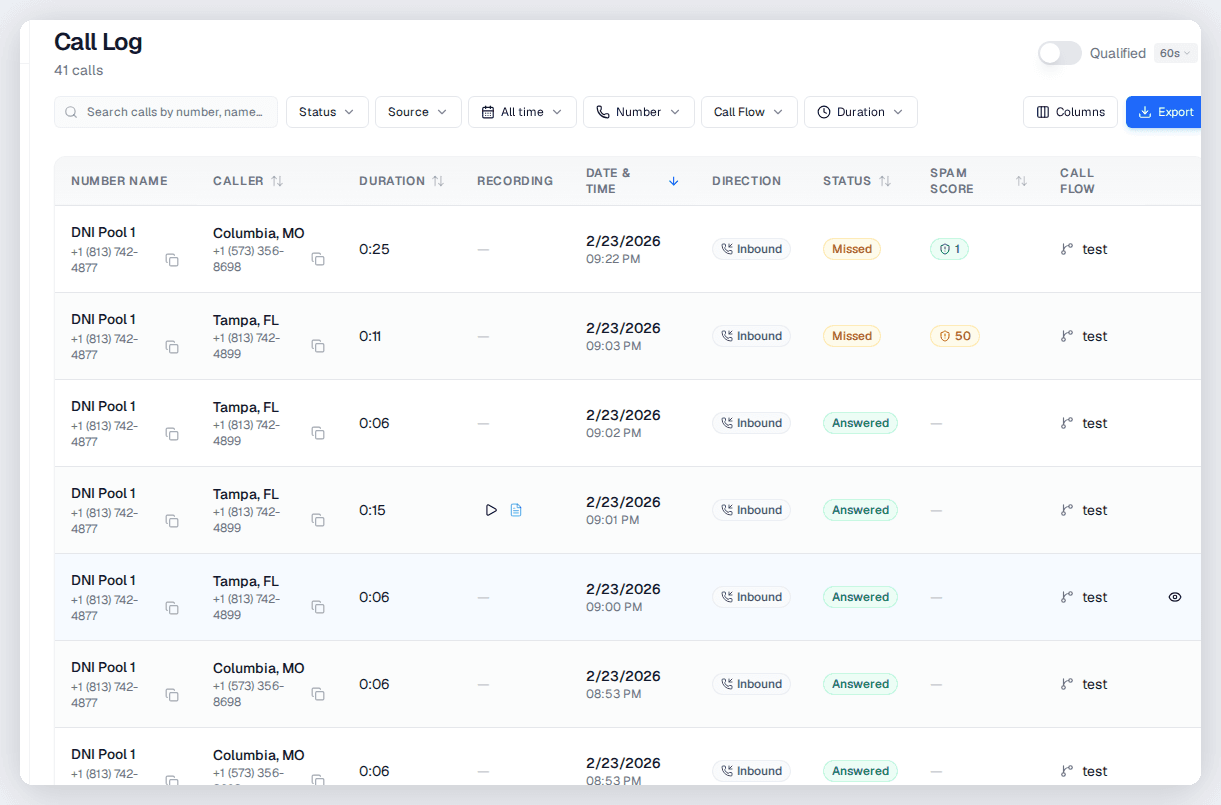
Call Tracking for HVAC Companies
Call Tracking Software for HVAC Companies
Everything you need to track, route, and analyze phone calls. Purpose-built for hvac companies.
Schedule-Based Routing
Automatically routes calls by time of day, day of week, and holidays with no manual switching.
Multi-Ring Dispatch
All dispatchers ring simultaneously so the fastest person answers every call.
AI Emergency Scoring
Scores each call 0 to 100 on urgency so your team prioritizes system failures over routine questions.
Google Ads Conversion Tracking
Sends call conversions back to Google Ads so Smart Bidding optimizes for keywords that book jobs.
Missed Call Text Notifications
Instant alerts when calls go unanswered so your team follows up before the homeowner calls another company.
Call Recording and Playback
Record every call for quality review, training, and verifying job details before dispatching a technician.
Quick Answers
Frequently Asked Questions
How does after-hours call routing work?
You set schedules for each time period. Business hours route to your office, evenings to your on-call tech, and overnight to your answering service. All transitions happen automatically with no manual changes required.
Can I track calls from truck wraps?
Yes. Put a unique tracking number on each truck and you will see exactly how many calls each vehicle generates. Numbers cost from $0.50 per month each.
How much does this cost for an HVAC company?
Most HVAC companies spend $75 to $250 per month total on the Pro plan. A single emergency job worth $3,000 or more covers an entire year of call tracking costs.
Does the AI detect emergency versus routine calls?
Yes. The AI identifies urgency signals like complete system failure, gas smell, and extreme temperatures. Emergency calls score 85 to 100, while routine maintenance requests score 20 to 50.
Can I route residential and commercial calls separately?
Yes. Use an IVR menu or separate tracking numbers for each. Commercial calls route to your commercial team while residential calls go to service dispatch.
How do I track which Google Ads keywords work best?
CallScaler captures the Google Click ID on every call and matches it to the keyword and campaign. Conversion data feeds back to Google so Smart Bidding focuses budget on keywords that generate actual service calls.
Call Tracking for Other Industries
Marketing Agencies
Best call tracking software for marketing agencies. White-label dashboards, unlimited clients, AI scoring — starting at $0/mo.
Home Services
Best call tracking for home services. Track calls from Google Ads, Local Services Ads, Yelp, and offline sources. AI scoring, attribution, and ROI reporting starting at $0/mo.
Law Firms
Best call tracking software for law firms. Track legal leads, monitor intake, score calls by case type. Starting at $0/mo.
Small Businesses
Best call tracking for small businesses. Start at $0/mo, track calls from every ad, and measure real marketing ROI.
Digital Marketers
Best call tracking for digital marketers. Full-funnel attribution, ad platform integrations, AI scoring — starting at $0/mo.
Plumbing Companies
Best call tracking for plumbers. Track emergency and service calls, route after-hours, measure marketing ROI. Starting at $0/mo.
Start Tracking HVAC Service Calls Today
Sign up free, get your first tracking number, and see exactly where your calls come from. No credit card required.